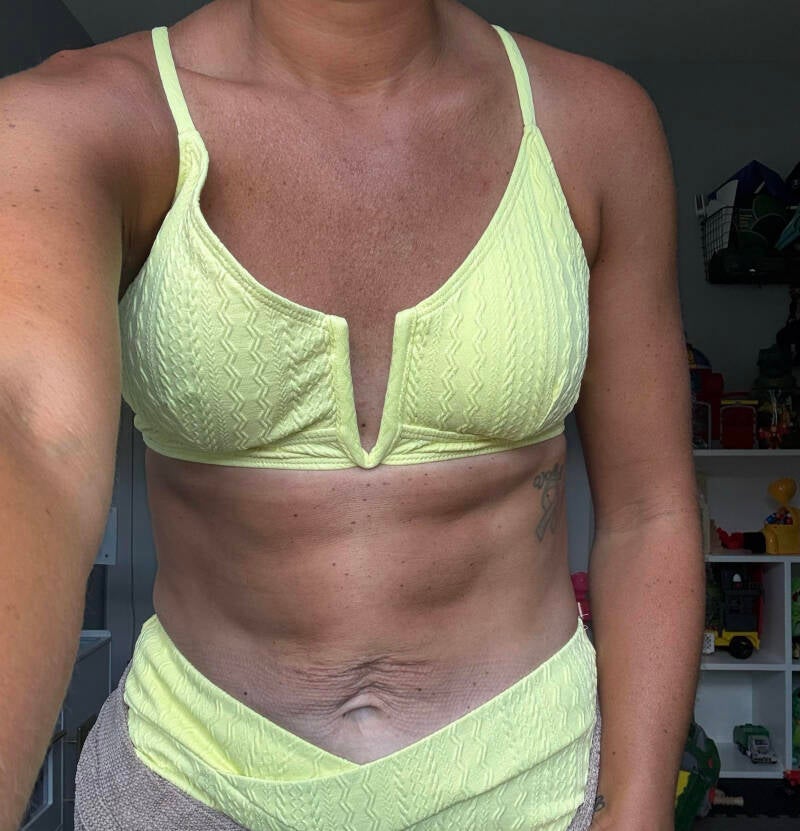
Why It Matters
If you're feeling:
- back pain when lifting
- hip or pelvic instability
- discomfort during floor play
- heaviness or pressure 'down there'
- doming at the midline
- difficulty engaging your lower core
- unpredictable leaking
..it’s not because you’re weak.
It’s because your core is disorganized, not disconnected.
During pregnancy:
- your abdominal wall stretched
- your pelvis changed positions
- your pelvic floor took on increased load
- your organs shifted
- your breathing mechanics adapted
- your nervous system compensated to protect youAfter birth:
Those systems don't automatically return to coordinated teamwork.
They need guidance.
If we skip this step and jump into harder workouts, symptoms worsen because:
1. Deep core muscles aren’t activating on time
This makes daily lifting feel harder than it should.
2. The pelvic floor isn’t managing pressure well
Leading to heaviness or leaking.
3. Your body compensates with the wrong muscles
Like gripping your glutes, clenching your jaw, or arching your lower back.
4. Movement becomes inefficient and fatiguing
Which leaves you feeling tired just walking through your day.
This matters because here's what happens next:
- you rebuild your foundation
- you restore efficiency
- your body learns to activate the right muscles at the right time
- this sets you up for pain-free, confident strength building
A strong core is NOT optional postpartum.
It is the center of every movement you make as a mom.
1. Understanding Your “New Core” Postpartum
Your core is not one muscle, it’s a pressure system made of:
- Diaphragm (breathing muscle)
- Transverse abdominis (TVA) (deep core)
- Pelvic floor
- Multifidus (deep spinal muscles)
Before pregnancy, this system likely activated subconsciously.
Postpartum, the system needs retraining because:
- The TVA was stretched and weakened.
- The pelvic floor may be tight, weak, or uncoordinated.
- Your diaphragm movement changed (shallower breathing).
- Scar tissue (cesarean or tearing) interrupts connections.
- Your nervous system prioritized survival, not strength.
This is why classic core exercises feel ineffective because they don’t restore the system.
The key skill you’re learning here:
Core activation that is gentle, coordinated, and timed with exhalation.
This is what protects your spine, supports your pelvic floor, and builds true strength.
2. Why We Start With “Anti-Movement” Exercises
Before crunches, sit-ups, or planks, your body needs to master stability.
These are exercises where:
- you resist rotation
- you resist arching
- you control limbs moving away from your center
- you stabilize instead of collapse
Examples:
- heel slides
- marches
- dead bug variations
- side-lying or quadruped stability work
These movements teach your core to say:
'I can hold steady while the rest of my body moves.'
This is the foundation of mom strength, because real life is full of unbalanced loads:
- holding a baby on one hip
- carrying groceries with one arm
- twisting to buckle a car seat
- reaching while kneeling
- bracing during unpredictable toddler movements
Anti-rotation and anti-extension work prevent the wobbly, unstable feeling that moms often mistake for weakness.
3. How to Use Your Breath to Support Your Core
As your limbs move, the key is:
- Inhale to prepare
- Exhale to activate and stabilize
On the exhale, imagine:
- your ribs gently knitting together
- your lower belly wrapping inward
- your pelvic floor lifting upward
Not a hard squeeze.
Not holding your breath.
Just a supportive reflex.
This is how your deep core becomes functional again.
4. How to Recognize When You're Doing Too Much
During core progressions, stop and modify if you see or feel:
- coning/doming
- pelvic heaviness
- leaking
- lower back pain
- hip gripping
- neck or shoulder tension
- breath holding
These are early-warning signs that:
- your load is too high
- your range of motion is too big
- your breath isn’t supporting the movement
- your deep core is still reactivating
We don’t push through these signs, we adjust.
Your goal is control, not speed or intensity.
5. How This Prepares You for Real Strength
Once your core can:
- support limb movement
- manage pressure
- stabilize your spine
- coordinate with breathing
…you are ready for:
- heavier strength training
- more dynamic mom tasks
- increased stamina work
- lifting and carrying with confidence
- floor play without back pain
- stair climbing without breathlessness
- transitions (sit ↔ stand, kneel ↔ stand) with stability